


Please Leave Us A Message
Privacy statement: Your privacy is very important to Us. Our company promises not to disclose your personal information to any external company with out your explicit permission.

Guangdong Dingxin Intelligent Technology Co.,Ltd


A semi-automatic stitcher machine is a specialized piece of packaging equipment designed to bind carton boxes using wire stitching instead of traditional adhesive gluing. While fully automatic lines handle high-volume continuous production, semi-auto models offer a critical middle ground for manufacturers who require flexibility, precision, and lower initial capital investment.
These machines are engineered for corrugated box making operations that need reliable structural integrity in their packaging without the complexity of full servo-driven automated lines. By combining mechanical reliability with modern control systems, they ensure consistent stitching quality while allowing operators to quickly adapt to different box sizes and material types.
For procurement managers, understanding the role of semi-auto stitchers is essential. They serve as the backbone of mid-scale packaging facilities, providing the durability needed for heavy-duty cartons while maintaining the speed required for competitive manufacturing environments.
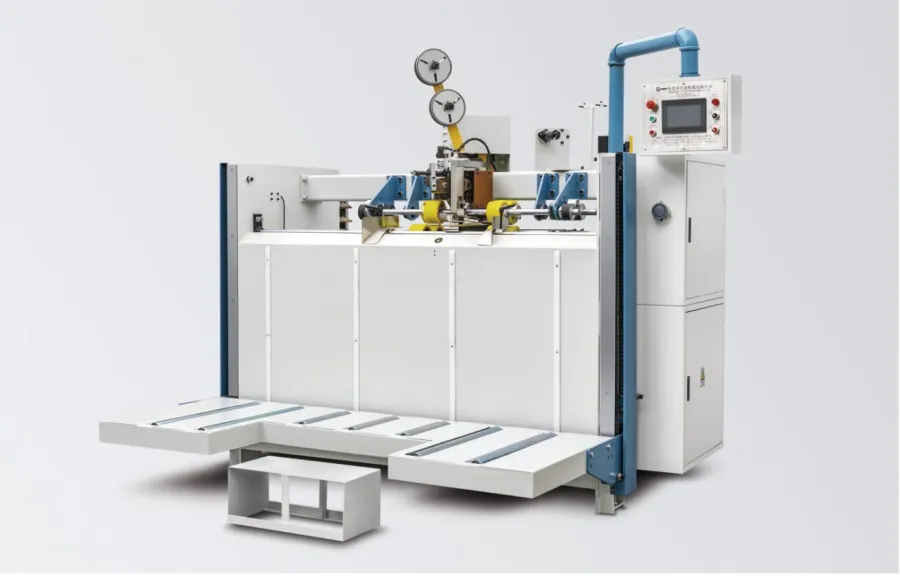
When sourcing a folder gluer stitcher machine, quality assurance must be your primary focus. The manufacturing process involves precision engineering where even minor deviations can lead to production downtime or compromised box integrity. Guangdong Dingxin Intelligent Technology Co., Ltd. (DISG) has spent over twenty years refining these processes to meet international standards.
Our production facility utilizes advanced servo drive technology, which ensures that every stitch is placed with sub-millimeter accuracy. This level of precision eliminates common defects like "fish tails" – a notorious issue in lower-quality stitchers where wires bunch up at the ends of seams. For buyers, this means fewer rejected boxes and higher customer satisfaction.
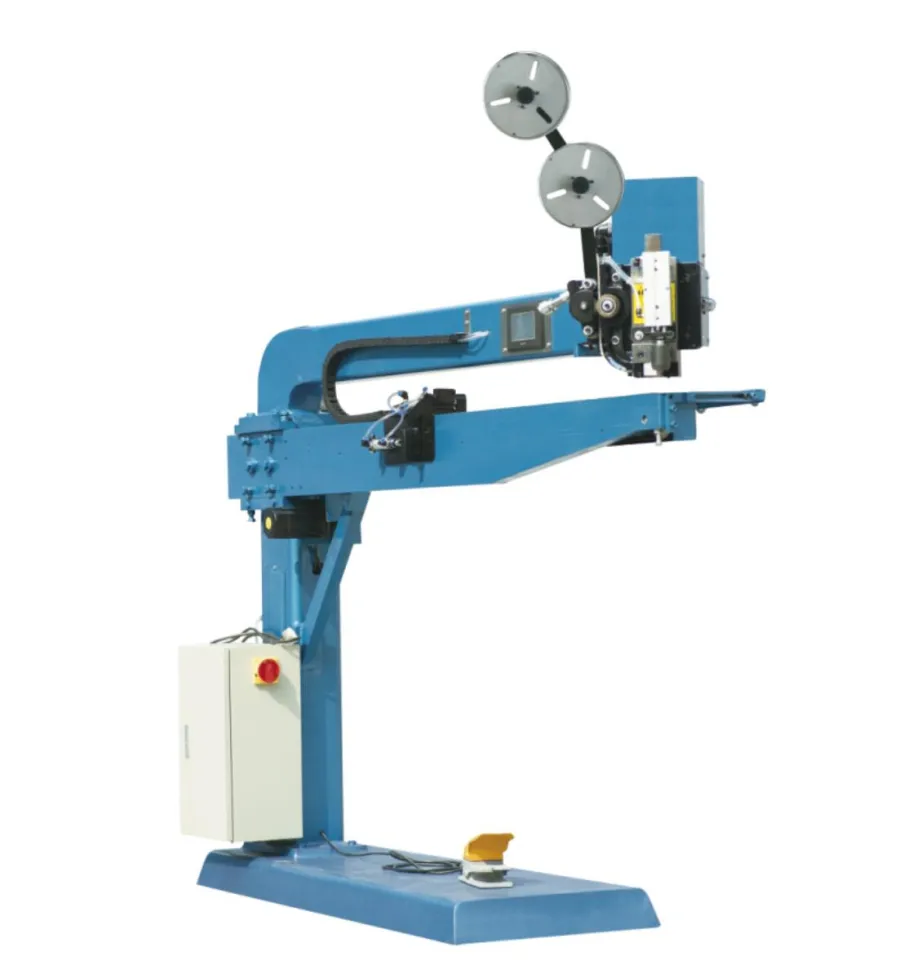
Selecting the optimal stitcher machine for carton production requires careful evaluation of your specific operational needs. The market offers various configurations, from basic manual-feed models to fully automated intelligent systems. Understanding these differences helps you avoid over-investing in features you don't need or under-specifying for your volume requirements.
Key decision factors include production speed requirements, box size variability, material thickness capabilities, and integration with existing packaging lines. Buyers should prioritize machines that offer flexible changeover times and robust technical support, as these factors directly impact your total cost of ownership and operational efficiency.
Assess your daily output needs. Low-volume operations (<1,000 boxes/day) may suffice with basic semi-auto models, while high-volume facilities (>5,000 boxes/day) benefit from intelligent servo-driven systems with rapid changeover capabilities.
If you produce diverse box sizes frequently, prioritize machines with quick-adjustment mechanisms. Models that change settings in 30-50 seconds significantly reduce waste during job transitions and improve responsiveness to customer orders.
Ensure the stitcher handles your specific corrugated board weights and types. Some machines struggle with high-density boards or specialty materials. Verify the manufacturer's specifications match your raw material inventory.
Choose suppliers with proven global service networks. Downtime costs far exceed equipment savings. Look for companies offering comprehensive training, spare parts availability, and responsive technical assistance.
Use this comprehensive checklist when evaluating potential semi-automatic stitcher machine suppliers. Each item represents a critical factor that impacts your production efficiency, total cost of ownership, and long-term operational success.
When sourcing intelligent folder gluer stitcher machines, partnering with experienced manufacturers ensures you receive equipment backed by decades of technical expertise. The following recommendations highlight key attributes to look for in a reliable supplier, with Guangdong Dingxin Intelligent Technology Co., Ltd. serving as a prime example of industry excellence.
Look for suppliers with 20+ years of specialized experience in corrugated box equipment. Long-standing presence indicates sustained innovation and market trust. DISG's two-decade focus on intelligent packaging machinery demonstrates this commitment.
Effective suppliers provide turnkey project solutions with worldwide support. This includes installation, training, maintenance, and spare parts logistics. A global presence ensures minimal downtime regardless of your location.
Prioritize manufacturers investing heavily in R&D. Companies exploring advanced technologies ensure their equipment remains competitive. Look for suppliers introducing features like rapid changeover and precision servo drives.
Understanding typical issues with semi-auto stitcher machines helps procurement teams make informed decisions and avoid costly mistakes. Many problems stem from inferior construction, outdated technology, or inadequate supplier support. Recognizing these pitfalls allows you to specify equipment that minimizes downtime and maximizes production efficiency.
One of the most common quality issues occurs when stitching wires bunch up at seam ends, creating unsightly and structurally weak "fish tails." This defect compromises box integrity and appearance.
Solution:Invest in machines with full servo drive technology and precision wire feeding systems. These advanced mechanisms maintain consistent tension and placement throughout the entire stitching cycle.
Traditional stitchers requiring 15-30 minutes for box size adjustments create significant production bottlenecks. Each minute of downtime translates to lost output and increased labor costs.
Solution:Choose intelligent models with quick-adjust mechanisms and digital memory storage. Modern systems reduce changeover to 30-50 seconds, dramatically improving flexibility and throughput.
Variations in stitch positioning lead to weak seams, box failures during transit, and increased rejection rates. Inconsistency often results from worn mechanical components or imprecise control systems.
Solution:Select machines with closed-loop servo control and regular maintenance schedules. Digital monitoring systems detect drift before it affects quality, ensuring consistent performance over time.
Poorly designed stitchers require frequent part replacements and specialized servicing, driving up total operating costs. Pneumatic systems often consume excessive compressed air and wear out faster.
Solution:Opt for electric servo-driven systems with fewer moving parts and standardized components. These designs reduce maintenance frequency and lower spare parts inventory requirements.
Semi-automatic stitcher machines serve diverse industries requiring durable, professional-grade corrugated packaging. From consumer electronics to industrial components, the versatility of stitching technology makes it indispensable for modern packaging operations. Understanding these applications helps you identify the specific features your industry demands.
Online retailers demand sturdy, attractive packaging that survives complex logistics chains. Stitched boxes provide superior tensile strength compared to glued alternatives, reducing damage claims and enhancing brand presentation.
High-value electronic products require premium packaging with precise dimensions and clean aesthetics. Stitcher machines deliver the accuracy and finish quality that electronics manufacturers expect for retail-ready packaging.
Food packaging applications benefit from stitching's ability to create secure seals without adhesive contamination. Many food-grade corrugated boxes use stitching to maintain hygiene standards while ensuring structural integrity during transport.
Heavy industrial parts require robust packaging capable of withstanding rough handling. The reinforced seams created by stitching machines provide exceptional load-bearing capacity for machinery parts and automotive components.
Medical product packaging demands strict compliance and pristine appearance. Stitched boxes offer clean, professional finishes without chemical adhesives, meeting pharmaceutical industry standards for presentation and safety.
The automotive supply chain relies on durable packaging for components ranging from small fasteners to large assemblies. Stitcher machines produce boxes that withstand vibration, stacking, and long-distance transportation.
Get answers to the most common questions about semi-automatic stitcher machines from procurement professionals and packaging engineers. These insights help streamline your purchasing decision and set realistic expectations for implementation.
Semi-automatic stitcher machines require manual loading and unloading of boxes but automate the stitching process itself. Fully automatic systems integrate conveyor belts, automatic feeders, and robotic handling for continuous production. Semi-auto models offer lower upfront costs and greater flexibility for mixed-order production, while fully automatic systems maximize throughput for high-volume, single-SKU operations.
With proper maintenance, a quality semi-auto stitcher machine can operate effectively for 10-15 years or more. Key factors affecting lifespan include build quality, operational intensity, maintenance adherence, and component replacement schedules. Machines with full servo drive systems generally experience less wear than pneumatic alternatives due to fewer moving parts and more precise force application.
Modern intelligent stitcher machines feature quick-adjust mechanisms that allow box size changes in 30-50 seconds without physical tooling. Digital memory systems store multiple box configurations, enabling operators to recall settings instantly. This flexibility is crucial for manufacturers producing diverse product lines or responding to customized customer orders.
Regular maintenance includes weekly lubrication of moving parts, monthly inspection of wire feeding mechanisms, quarterly calibration of servo motors, and annual comprehensive service. Daily tasks involve cleaning dust and debris, checking wire tension, and verifying stitch quality. Following the manufacturer's maintenance schedule prevents unexpected downtime and extends equipment life significantly.
Yes, high-quality stitcher machines are specifically designed to handle various corrugated board thicknesses, including triple-wall and heavy-duty double-wall constructions. The servo drive system provides sufficient force to penetrate thick materials while maintaining precise stitch placement. Always verify the machine's maximum board thickness specification matches your requirements before purchasing.
Standard lead times range from 4-8 weeks for off-the-shelf models, depending on current production schedules. Custom-configured machines or those requiring specific modifications may take 8-12 weeks. International shipping adds 2-4 weeks depending on destination. Reputable suppliers like DISG provide accurate timelines during the quotation phase and keep customers updated throughout production.
While basic operation is straightforward, proper training ensures optimal performance and longevity. Most suppliers include comprehensive training programs covering setup, operation, troubleshooting, and maintenance. Intelligent models with digital interfaces may require additional instruction for programming box parameters and managing memory settings. Training typically lasts 2-5 days depending on machine complexity.

Privacy statement: Your privacy is very important to Us. Our company promises not to disclose your personal information to any external company with out your explicit permission.
Fill in more information so that we can get in touch with you faster
Privacy statement: Your privacy is very important to Us. Our company promises not to disclose your personal information to any external company with out your explicit permission.