


Please Leave Us A Message
Privacy statement: Your privacy is very important to Us. Our company promises not to disclose your personal information to any external company with out your explicit permission.

Guangdong Dingxin Intelligent Technology Co.,Ltd


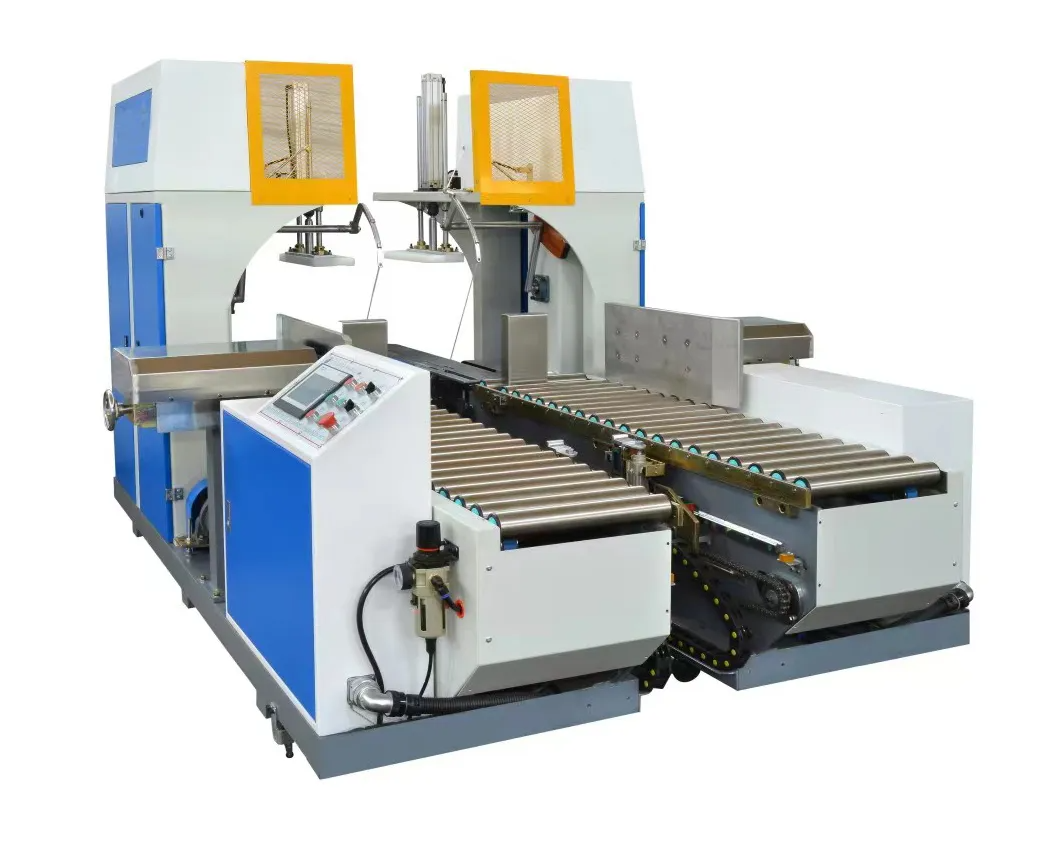
A carton strapping machine is an automated packaging solution designed to secure corrugated boxes using high-tension plastic or steel straps. Unlike manual strapping, which relies on operator strength and consistency, these machines apply precise tension to ensure load stability during transit.
For procurement managers, the shift from manual to automatic strapping represents a critical investment in supply chain reliability. These systems are essential for industries ranging from e-commerce to heavy manufacturing, where preventing cargo shift and package damage is paramount. By standardizing the strapping process, businesses reduce product loss and enhance the professional presentation of their goods.
Key Benefit: Automated tension control ensures every box meets safety standards, reducing liability and returns caused by shipping damage.
Automatic systems operate at speeds far exceeding manual labor, significantly increasing your daily output capacity without requiring additional headcount.
Every strap is applied with identical tension, eliminating human error and ensuring consistent load security across all shipments.
Lower labor requirements and reduced material waste lead to a rapid return on investment, lowering your per-unit packaging cost.
Guangdong Dingxin Intelligent Technology Co., Ltd. (DISG) specializes in the research and development of intelligent packaging machinery for over twenty years. Our commitment to quality is reflected in our rigorous manufacturing processes and advanced engineering capabilities.
We invest significant resources into R&D to ensure our equipment remains at the forefront of the industry. Our team combines deep technical expertise with rich industry experience to provide turnkey project solutions that meet global standards.
Our Advantage: Two decades of focused innovation mean you get proven, reliable technology backed by continuous improvement and expert support.

Assess your current and projected output. High-volume lines require semi-automatic or fully automatic systems with fast cycle times, while lower volumes may suffice with portable or table-top units.
Ensure the machine's sealing table size accommodates your largest boxes. Heavier loads may require machines capable of handling higher tension levels or steel strapping.
Look for machines that integrate seamlessly with existing conveyor systems. PLC controls and sensor-driven operation minimize downtime and simplify workflow integration.
Choose a supplier with a global service network. Availability of spare parts, technical training, and responsive support is crucial for minimizing operational disruptions.
Speed Verification: Confirm the machine's cycles per minute matches your production line speed.
Tension Control Range: Ensure adjustable tension settings cover your specific strap types and load requirements.
Material Compatibility: Verify the machine works with your preferred strap materials (PP, PET, Steel).
Safety Features: Check for emergency stops, guards, and interlocks to protect operators.
Service Response Time: Confirm the supplier's ability to provide timely technical support in your region.
Prioritize suppliers with a proven track record in packaging machinery. Look for companies with extensive R&D capabilities and a history of innovation, such as DISG, which has specialized in this field for over two decades.
Choose suppliers who offer comprehensive technical support, including installation guidance, operator training, and troubleshooting assistance. Deep industry knowledge ensures better problem-solving.
For international buyers, select suppliers with a global presence. Access to local spare parts and service engineers minimizes downtime and ensures long-term operational efficiency.
One of the most frequent issues is uneven tension, leading to loose or overly tight straps. This often results from improper machine calibration or worn tensioning discs. Regular maintenance and operator training can mitigate this risk.
Poor seal integrity can cause straps to break under load. This may be due to incorrect heater temperature, dirty sealing bars, or incompatible strap material. Ensuring the machine is set up for your specific strap type is crucial.
Machines that do not sync well with existing conveyors can create bottlenecks. Always verify communication protocols (PLC, I/O) and physical dimensions before purchase to ensure seamless integration.
Long lead times for replacement parts can halt production. Work with suppliers who maintain regional inventory or have clear, fast shipping channels for critical components like cutters and seals.
High-speed strapping is essential for processing thousands of parcels daily. Reliable machines ensure packages arrive intact, protecting brand reputation and reducing customer complaints.
Strapping secures cases of beverages and food products during distribution. Machines must meet hygiene standards and handle varying box sizes common in this sector.
Heavy-duty strapping machines secure raw materials, finished goods, and industrial components. High-tension capabilities are required to prevent shifting during transport.
Secure packaging is vital for hazardous or sensitive materials. Strapping machines provide the necessary stability to prevent leaks or damage, ensuring regulatory compliance.
Bales of paper and pulp require strong, consistent strapping to maintain shape and integrity. Automated systems handle the weight and volume efficiently.
Heavy construction supplies like tiles, pipes, and lumber need robust securing. Industrial-grade strapping machines ensure safe handling and transport of these bulky items.

Privacy statement: Your privacy is very important to Us. Our company promises not to disclose your personal information to any external company with out your explicit permission.
Fill in more information so that we can get in touch with you faster
Privacy statement: Your privacy is very important to Us. Our company promises not to disclose your personal information to any external company with out your explicit permission.