


Please Leave Us A Message
Privacy statement: Your privacy is very important to Us. Our company promises not to disclose your personal information to any external company with out your explicit permission.

Guangdong Dingxin Intelligent Technology Co.,Ltd
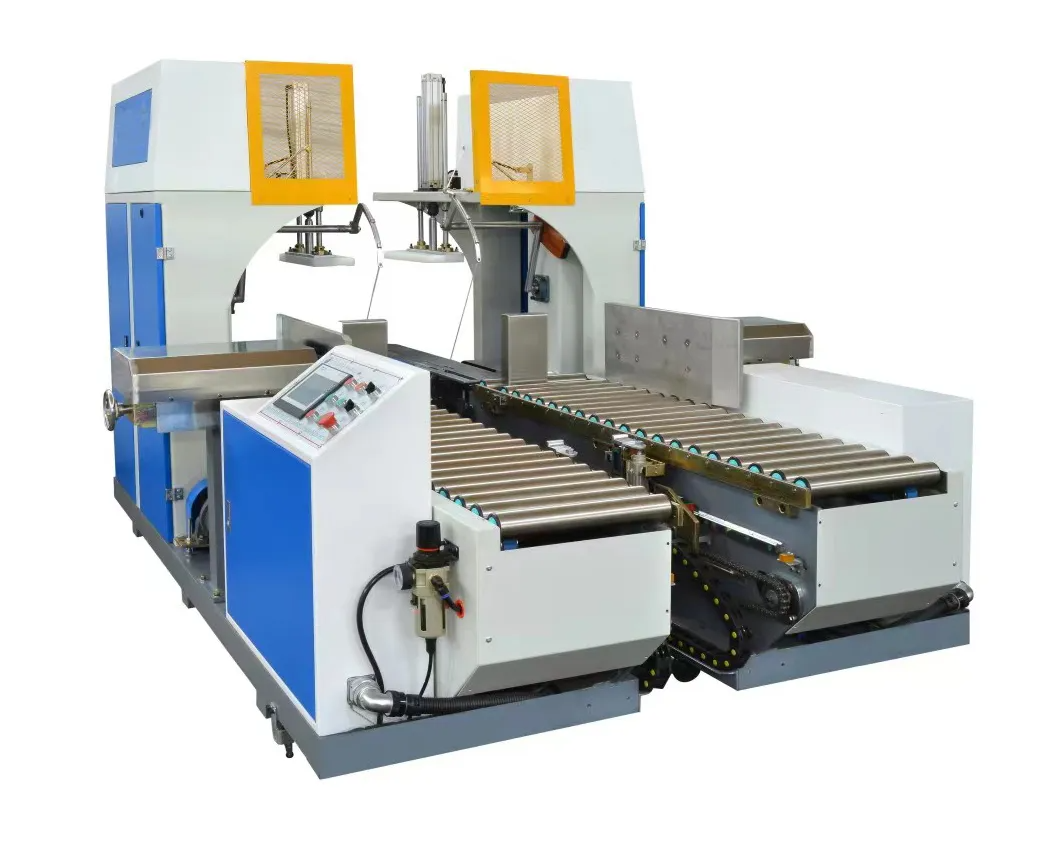
A semi-automatic strapping machine is a packaging solution designed to secure palletized goods or cartons using tensioned plastic or steel straps. Unlike fully automatic systems that require conveyor integration, these machines are typically handheld or portable units operated by a single worker.
For procurement managers, the distinction between manual and semi-auto is critical. While manual strapping relies on hand tensioning tools that vary in consistency, a semi-auto strapper provides mechanical tensioning and heat sealing (or friction welding).
This ensures uniform tension across every unit, reducing the risk of load failure during transit. The primary benefit for your business is the ability to maintain high-quality packaging standards at a lower capital cost than fully automated lines, making it ideal for facilities with moderate throughput needs.
When sourcing industrial strapping equipment, build quality directly impacts your operational uptime. A reliable semi-auto strapper must withstand daily heavy use without jamming or failing to seal.

Leading manufacturers subject their strapping machines to rigorous cycle testing before shipment. This involves thousands of continuous tensioning and sealing cycles to verify motor durability and heater element longevity.
The internal components, such as the tensioning arms and sealing jaws, are often made from hardened steel alloys. This ensures that the machine maintains precise tolerances over time, which is essential for consistent seal strength on PP and PET straps.
Buyer Benefit: Investing in high-grade manufacturing reduces your downtime costs and minimizes the need for frequent repairs, lowering your total cost of ownership.
Selecting the correct strapping tool requires analyzing your specific packaging workflow. Not all machines are created equal, and choosing the wrong type can lead to inefficiencies and increased labor fatigue.
First, determine if you use Polypropylene (PP), Polyester (PET), or Steel strap. Most modern semi-auto machines are versatile, but some are specialized. Ensure the tool you select matches your current consumable inventory to avoid switching costs.
Since operators will hold the device for extended periods, weight distribution is vital. Lighter models reduce operator fatigue, leading to higher productivity and fewer workplace injuries. Look for designs with balanced grips and low vibration.
Decide between battery-powered (Li-ion) and pneumatic (air compressor) models. Battery units offer mobility and no air hose restrictions, while pneumatic units offer potentially higher tension forces but require infrastructure setup.
Use this checklist to evaluate potential suppliers and ensure you don't overlook critical technical or commercial requirements.
Even high-quality machines can encounter issues. Understanding common faults helps you troubleshoot quickly and maintain productivity.
Causes: Incorrect tension setting, worn tensioning wheels, or dirty feed rollers.
Solution: Increase tension settings incrementally. Clean the feed path with compressed air. Replace worn rubber wheels if they slip.
Causes: Heater element failure, incorrect blade alignment, or wrong strap type.
Solution: Check the heater temperature. Ensure the cutting blade is sharp and aligned. Verify the strap matches the machine's specification (PP vs PET).
Causes: Safety trigger misalignment, empty battery, or blocked sensor.
Solution: Check the safety lever position. Recharge or replace the battery. Clean the optical sensors inside the feed head.
Causes: Lack of lubrication, loose internal components, or foreign debris.
Solution: Apply light machine oil to moving parts (if recommended). Inspect for loose screws. Clear any jammed strap fragments.
Choosing the right manufacturer goes beyond price. You need a partner who supports your long-term packaging efficiency.
Look for suppliers offering 24/7 troubleshooting assistance and comprehensive spare parts lists.
Evaluate the total cost, including strap consumption rates. Efficient machines use less material per seal.
Ensure the equipment meets CE, UL, or other regional safety standards required for your facility.
Get answers to the most common questions from procurement professionals regarding semi-automatic strapping solutions.
A manual strapper requires the operator to tension the strap by hand using a ratcheting handle, which is slow and inconsistent. A semi-auto strapper uses a motor to automatically tension the strap and applies heat or friction to seal it, significantly speeding up the process and ensuring uniform tension.
Some versatile models support both, but many are specialized. PET straps require higher tension and different sealing methods (often friction weld) compared to PP straps (often heat seal). Always check the machine's specifications before purchasing to ensure compatibility with your strap type.
An experienced operator can typically complete a pack in 5-10 seconds using a semi-auto tool. This is roughly 3-4 times faster than manual strapping, allowing for much higher throughput in busy packing stations.
Not necessarily. There are two main types: pneumatic (requires an air compressor) and battery-powered (cordless). Battery-powered models are increasingly popular because they offer portability and eliminate the need for air hoses, though they may have slightly lower maximum tension forces.
Regular maintenance includes cleaning the feed path to remove dust and strap debris, checking the tensioning wheels for wear, and occasionally lubricating moving parts (if recommended by the manufacturer). Keeping the tool clean ensures consistent performance and extends its lifespan.

Privacy statement: Your privacy is very important to Us. Our company promises not to disclose your personal information to any external company with out your explicit permission.
Fill in more information so that we can get in touch with you faster
Privacy statement: Your privacy is very important to Us. Our company promises not to disclose your personal information to any external company with out your explicit permission.